Archive for June, 2025

Unlocking wind and solar through regional action
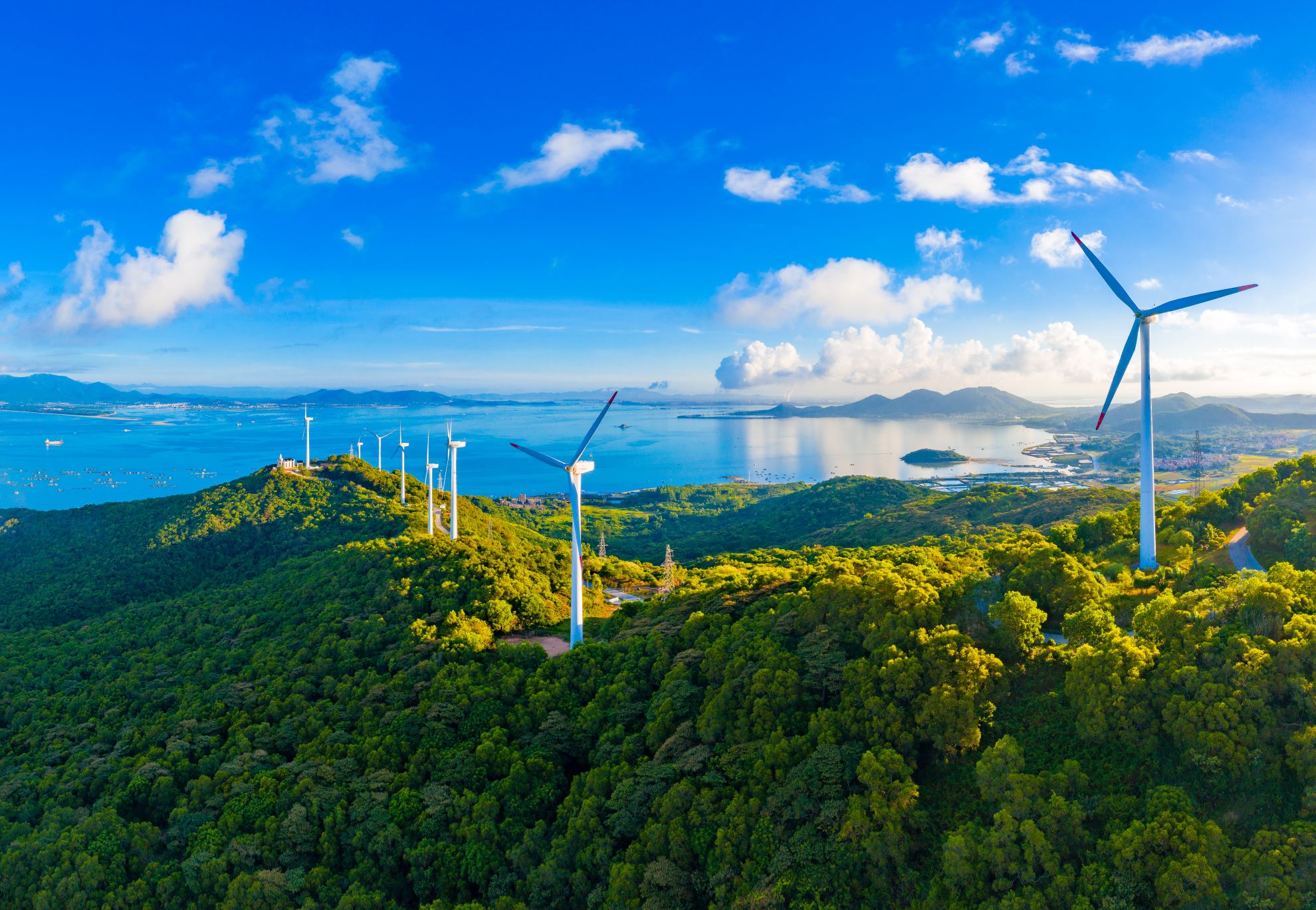
Unlocking Wind and Solar Through Regional Action – 2024 Annual Report

This first annual ReNew2030 report focuses on stories of impact from the field, set against a backdrop of international statistics showing progress in wind and solar and reflecting on whether we are on track to meet our goal.

  Read our report

Our mission is bold yet focused: to scale wind and solar power five-fold by 2030 in the 20 countries that account for around 80% of global power sector emissions.

These countries hold the key to bending the emissions curve – and ReNew2030 exists to help tip the balance. By supporting catalytic partnerships, driving strategic influence, and backing projects with real-world impact, ReNew2030 is working to reshape energy systems in ways that are just, inclusive, and grounded in local priorities.

Regional climate foundations leading local change

In 2024, ReNew2030 regional partners made remarkable progress across diverse geographies, often navigating complex and volatile contexts. Despite these challenges, regional climate foundations remained resilient, ambitious, and solutions-driven to deliver tangible results.


Driving international impact with our partners

2024 was the year of sustaining the momentum on the 3xRenewables goal announced at COP28 in Dubai. Throughout the year, ReNew2030 played a pivotal role in driving accountability and progress toward implementation, supporting a diverse network of transnational partners across regions.

POOLED FUND ON INTERNATIONAL ENERGY

With support from its transnational partner, the Pooled fund on International Energy (PIE), ReNew2030 collaborated with the Global Renewables Alliance to host the first-ever Global Renewables Summit in September 2024 in New York. This gathering brought together governments, private sector, philanthropies, international organisations, and academia – uniting all key stakeholders for the first time to strategise on accelerating the global race to tripling renewable energy capacity.


THE SUNRISE PROJECT

The Sunrise Project played an important role in engaging financial institutions in global policy-making spaces. Through its flagship Global Finance Programme, Sunrise advanced efforts to align financial
systems with clean energy goals, drawing on insights from its work in Asia and Europe. One major initiative was the Sustainable European Central Bank coalition, calling for financial policies that facilitate the energy transition such as dual interest rates.

INTERNATIONAL CLIMATE POLITICS HUB

Another transnational partner, International Climate Politics Hub (ICPH), leveraged its trusted diplomatic network to push for progressive climate policy at the global level. Throughout the year, ICPH remained steadfast in its efforts, ensuring the most ambitious outcomes possible, despite a challenging
political environment. At COP29, where some parties sought to weaken last year’s Global Stocktake language on the energy transition, ICPH’s engagement was instrumental in holding the line.

Strategic storytelling and influence

ReNew2030 amplifies its impact through media coverage, thought leadership, and high-profile platforms, ensuring its work reaches key audiences. TED talks, opinion articles in Financial Times Sustainable Views, and strategic engagements at COP29 have elevated its visibility, driving conversations on renewable energy.

Tap on the priority areas below to discover more details:

1

Authentic storytelling that inspires

ReNew2030 is expanding how it tells its story – launching a voice-note video series featuring community energy successes, and publishing partner-driven blogs on overcoming structural barriers and building inclusive momentum for renewables.

2

Broadcast and media highlights

ReNew2030’s narrative was featured on the NPR TED Radio Hour, bringing solar energy challenges and opportunities to mainstream audiences. Media moments like this help ensure that the clean energy transition remains part of the global public dialogue.

3

Connecting through digital channels

With the launch of our quarterly newsletter in 2024 and a refreshed, more accessible website, ReNew2030 has strengthened its digital presence – sharing partner stories, spotlighting achievements, and deepening engagement across the coalition.

4

Making waves at major global platforms

Whether at New York Climate Week – where ReNew2030 co-hosted the first ever Global Renewables Summit – COP29, or the Berlin Energy Transition Dialogue, ReNew2030 takes part in many of the main global climate events. At COP29, we partnered with We Don’t Have Time to spotlight renewable energy solutions, alongside the African Climate Foundation and Tara Climate Foundation. In Berlin, we co-hosted a strategic convening with the Global Renewables Alliance, aligning voices on finance, permitting, workforce development, and countering disinformation.

5

From TED talks to the Financial Times: Reaching global audiences

ReNew2030 has taken centre stage across influential media and thought leadership platforms. TED talks featuring early ReNew2030 perspectives and a compelling case study by Tara Climate Foundation have reached over 1.3 million viewers, sparking conversations well beyond the climate community. Opinion articles in FT Sustainable Views have reinforced the coalition’s key messages, from scaling solar to unlocking finance.

Modernising the Grid: The missing link to scaling renewables

Modernising the Grid: The missing link to scaling renewables

The world is making significant strides toward a clean energy future, but our electricity grids are stuck in the past. Unless we rapidly modernise grid infrastructure, the entire net zero vision is at risk.

Outdated, underfunded, and overstretched, electricity grids have become one of the biggest barriers to scaling renewable energy. Wind and solar projects are being delayed or cancelled due to grid bottlenecks while curtailment – the intentional reduction of renewable energy output – is expected to rise in areas where grid flexibility and storage capacity remain limited. Modern, resilient grids are essential for economic and social development, and for protecting communities from climate impacts like heatwaves, wildfires and floods. Despite growing investments, regional disparities and infrastructure gaps risk leaving some communities behind in the energy transition.

But solutions exist and philanthropy has an important role to play in modernising the grid infrastructure. Over 60 countries and 100 non-state actors have signed the Global Energy Storage and Grids Pledge, committing to add or refurbish 25 million kilometres of grids by 2030. At ReNew2030, we believe that philanthropy is uniquely placed to accelerate grid modernisation. By unlocking investment, streamlining policies, and supporting regulatory reforms and local capacity building, we can help turn electricity grids into the backbone of the clean energy transition.
Through conversations with experts and partners in the sector, we identified key barriers to progress and explored how philanthropy can be a powerful catalyst for change.

What are the key challenges to grid modernisation?

Lengthy regulatory processes

Planning and approval for grid projects is often slow and complex and in some cases takes up to a decade. Complex permitting requirements, environmental assessments, and stakeholder consultations can create bottlenecks that slow down project development. These delays not only hinder the integration of renewable energy but also impact grid reliability and resilience.

Current regulatory frameworks often lack the flexibility to support rapid investment and innovation in grid infrastructure. Streamlining these processes, while maintaining robust oversight, is crucial to building a modern, resilient, and renewable-ready grid.

Philanthropy can play a critical role in accelerating regulatory reform through policy engagement and public education. Raising awareness of the urgent need and broad benefits of grid modernisation is key. By funding research and engaging with policymakers, philanthropic organisations can help shape policies, encourage investment, and support faster, more effective approval processes.

Unlocking investment

Modernising the grid is one of the most critical – and complex – challenges in the transition to renewable energy. The need to expand and upgrade aging infrastructure while integrating variable renewable energy sources is well established. Yet the sheer scale of investment – estimated at USD 717 billion annually through 2030, combined with regulatory fragmentation, uncertain financial returns and market design barriers, continues to hold back private capital.

This investment gap is especially stark in the Global South, where the urgent need to expand and modernise transmission and distribution infrastructure poses a significant hurdle to achieving energy transition goals.

While advanced economies grapple with modernising their aging grid infrastructure, some developing economies are still laying the foundations for their power systems. This makes grid investment not only a matter of modernisation, but a cornerstone of development, resilience and energy equity.

To bridge this gap, philanthropic capital can play a catalytic role. By funding early-stage pilots, strengthening institutional and technical capacity, supporting research, and addressing market failures – particularly in regions facing persistent investment gaps, philanthropy can help de-risk innovation and attract commercial investment.

A powerful example is the Renewables Investment Platform For Limitless Energy (RIPLE), a $500 million initiative led by the Nigeria Sovereign Investment Authority with strategic support from our partner, The African Climate Foundation. Designed as a systems-change effort, RIPLE is unlocking private capital to build a scalable, resilient renewable energy ecosystem in Nigeria. With 300 MW of renewable energy projects already in the pipeline, it demonstrates how public-private collaboration can drive large-scale transformation. RIPLE offers a replicable model for grid investment and clean energy deployment in emerging markets.

Equipping local actors with the skills and tools to design, manage, and maintain future-ready grids is essential. This includes workforce development and technical education, alongside support for the digital transformation of electricity systems — ensuring they are smart, adaptive, and capable of balancing supply and demand in real time.

The power of philanthropy

Philanthropy can play a transformative role in accelerating grid expansion and modernisation – bridging gaps often left by governments and private investors.

By catalysing progress, de-risking innovation, and strengthening institutional capacity, philanthropy can help deliver a just, inclusive and sustainable clean energy future.